The Fusion of Art and Architecture in Frameless Interior Doors
Frameless interior doors have transcended their traditional function as mere passageways; they have become critical elements of architectural expression and functional art within contemporary design. This article examines frameless interior doors not just as components of a wall opening but as dynamic objects that shape movement, perception, and aesthetic experience in modern residential and commercial interiors.
Redefining Architectural Movement Through Doors
An interior door’s value lies in how it orchestrates the way people move through a space. Frameless interior doors, by eschewing traditional thick frames and visible hardware, encourage an uninterrupted visual flow and a tactile fluidity that conventional doors cannot achieve.
Dynamic motion is a key aspect here — frameless doors can pivot, slide, or swing with subtle grace, effectively contributing choreography to interior navigation. The door’s movement becomes a performance, animating still architecture and engaging occupants in an intuitive spatial dialogue.
Example: Pivot Doors as Sculptural Statements
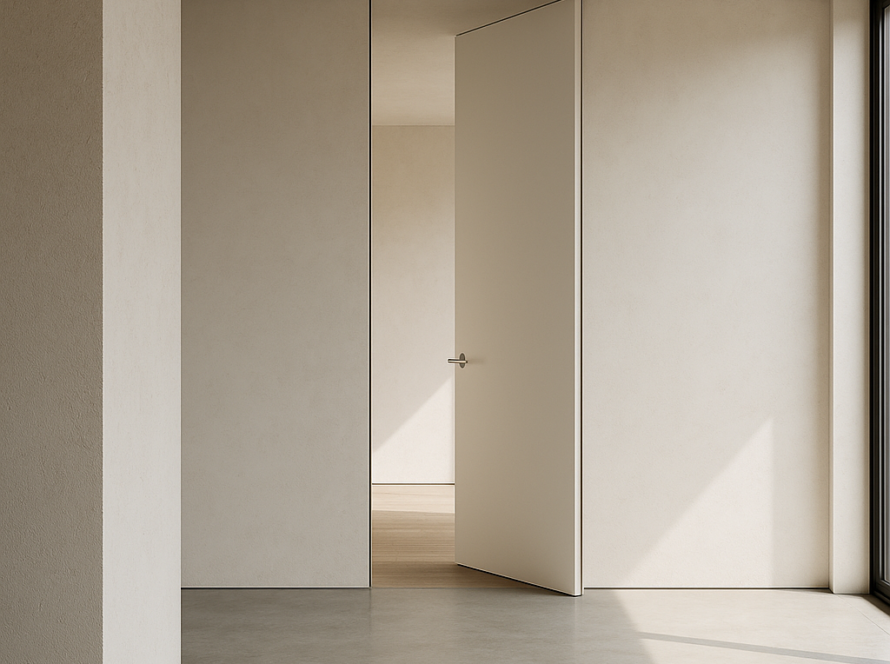
Pivot frameless doors, in particular, blend structural ingenuity with elegant simplicity. By rotating on a fixed point rather than traditional hinges, they create a smooth, fulcrum-like motion that often feels sculptural. This interaction of balance and motion invites users to savor the opening and closing action, transforming a utilitarian gesture into an experiential ritual.
Aesthetic Minimalism Meets Functional Sophistication
The removal of bulky frames and visible door casings aligns with minimalist principles, but the architectural challenge lies in preserving durability and smooth operation. Innovative materials like tempered glass, aluminum-alloy hardware, and high-precision concealed mechanisms allow frameless doors to maintain strong structural integrity while achieving near invisibility in their surroundings.
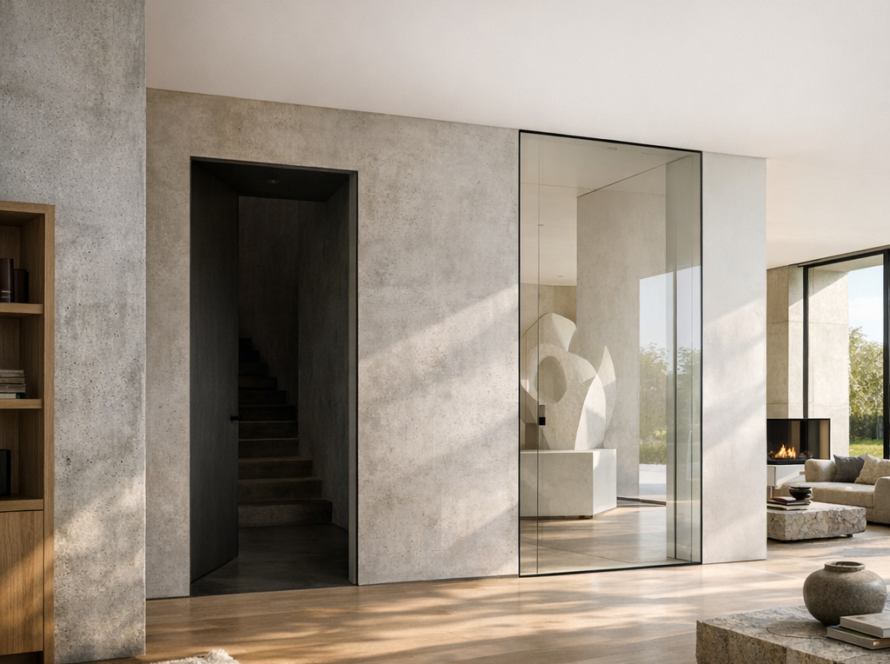
These doors cleverly blur boundaries between rooms while defining transition zones. They act as visual thresholds, limiting distraction while simultaneously encouraging connection between spaces—this duality is a sophisticated architectural paradox that frameless designs uniquely embody.
The Impact on Spatial Perception
By removing visual clutter, frameless doors expand perceived space, enhancing ambient light penetration and reinforcing design continuity. The spatial openness achieved lends interiors a lightness that complements contemporary architectural moods, whether in private residences or public interiors.
Seamlessness encourages the eye to wander uninterrupted, often emphasizing carefully curated materials, finishes, or colors that coordinate with door surfaces. Such visual alignment extends across walls, floors, and ceilings, elevating the door to an integral part of the architectural language rather than a discrete element.
Material Choices as Design Statements
The selection of glass, wood veneers, or metal surfaces in frameless doors carries high aesthetic significance. For instance, translucent or frosted glass can generate ethereal light effects and soften boundary definitions, while rich wood grain veneers can bring warmth and tactile contrast.
Architects and designers often use these materials to complement wider interior palettes, matching door finish with adjacent wall panels or cabinetry, which can be explored in greater depth in the Frameless Interior Doors catalog.
Frameless Doors in Curated Architectural Experiences
More than functional objects, frameless interior doors are now curated by architects to enhance the narrative and harmony of a space. Their discretion supports minimalist environments, while their motion and materiality enrich user experience.
For inspiration on integrating frameless doors as elegant architectural details, visiting DAYORIS offers a curated gallery of premium door designs showcased in sophisticated residential environments.
Conclusion: The Door as Living Architecture
Frameless interior doors embody the synergy of form and function, becoming more than thresholds—they animate interiors as living, breathing architectural elements. Their understated presence, combined with fluid mechanical action, instills interiors with harmony and elegance, redefining the role of doors as catalysts for spatial continuity and artistic expression.
Homeowners, designers, and architects exploring frameless doors are engaging with an evolving architectural discourse where doors not only connect spaces physically but also function as integral components of an environment’s visual and experiential identity.
Discover more about the nuanced world of frameless interior doors and their architectural implications at Frameless Interior Doors.