The Fusion of Frameless Interior Doors and Architectural Glass
Frameless interior doors have long been celebrated for their clean lines and minimal visual interruptions. When paired with high-performance architectural glass, their aesthetic and functional capabilities gain new dimensions. This fusion redefines transparency and material expression within sophisticated contemporary interiors.
Understanding Architectural Glass in Interior Doors
Architectural glass used in frameless doors differs significantly from standard glazing materials. It can include low-iron glass, laminated or tempered variants, and coatings that enhance durability, light transmission, and even energy efficiency within interior spaces.
Low-iron glass, for instance, offers exceptional clarity by reducing greenish tints common in regular glass, resulting in pristine transparency. Tempered or laminated options improve safety, allowing large glazed panels to be used securely as door leaves.
Design Implications of Glass Quality on Frameless Doors
The choice of glass impacts not only aesthetics but also the interaction between spaces. Highly transparent doors foster visual connectivity, allowing daylight to permeate deeper into rooms, enhancing perceived volume and openness.
- Visual Lightness: Frameless glass doors with ultra-clear glass appear almost floating, lending a sculptural quality to the door itself.
- Material Harmony: Architectural glass’s smooth, reflective finish pairs beautifully with polished metals and natural stones frequently used in modern interiors.
- Customization Potential: Various coatings and treatments enable architects to tailor light diffusion, glare control, or privacy levels without sacrificing a frameless aesthetic.
Functional Benefits That Complement Architectural Intent
Beyond aesthetics, frameless interior doors combined with advanced glass technology present practical advantages valuable to architects and homeowners:
- Acoustic Performance: Laminated glass in frameless doors can improve sound isolation, essential in open-plan layouts or multi-functional spaces.
- Thermal Regulation: While less critical for interior doors, specialized coatings can moderate heat transfer, supporting interior climate control strategies.
- Durability and Safety: Toughened glass resists impact and wear, ensuring longevity and safe operation in high-traffic areas.
Architectural Applications and Spatial Impact
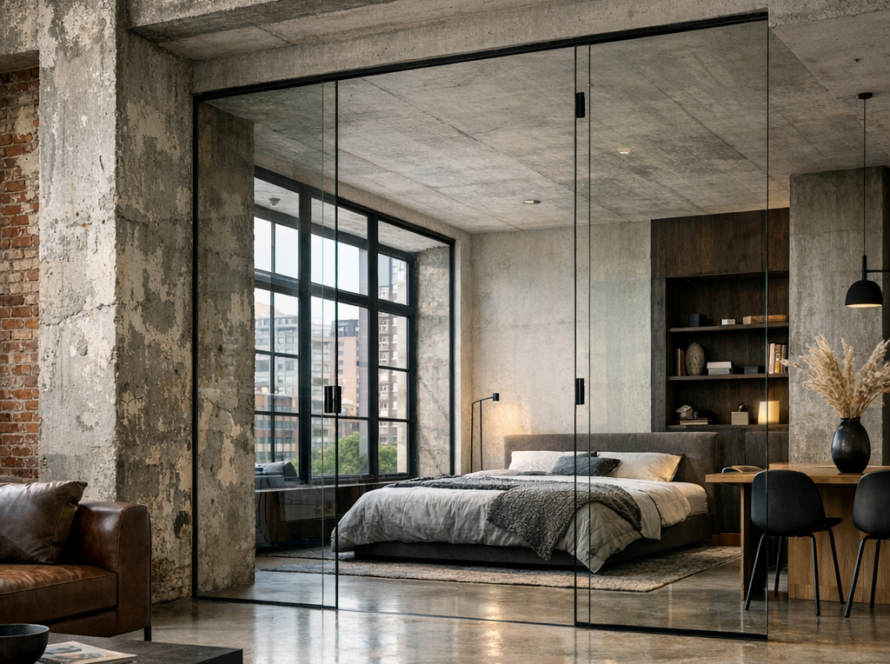
In modern architecture, frameless interior doors featuring architectural glass are used to subtly delineate spaces without erecting visual barriers. Their transparency invites natural light, preserves sightlines, and visually expands compact interiors.
For example, in boutique residences or luxury apartments, such doors allow fluidity between living, dining, and work areas while maintaining discrete functional zones. In design studios or galleries, transparency supports the display or creation of art uninterrupted by imposing frames.
The juxtaposition of the door’s minimalist hardware with high-performance glass produces an elegant tension between material solidity and invisibility. This balance is increasingly sought in projects prioritizing openness and refined detail.
Integrating Frameless Doors with Contemporary Architectural Elements
Architectural glass frameless doors harmonize well with other modern interior components:
- Metal Accents: Brushed steel, black anodized aluminum, or brass hardware amplify minimalist sophistication.
- Natural Stone or Wood: Contrasting the smooth glass with warm wood grains or textured stone enriches tactile experience.
- Lighting: Strategically placed LED strips or daylighting schemes accentuate the door’s transparency and frame-free edges.
These combinations create layered visual narratives strengthening the architectural character and experiential quality of interior spaces.
Premium Inspirations and Resources
Designers seeking exemplary models of frameless interior doors with advanced architectural glass technology may find inspiration on specialized platforms like Dayoris. Their curated collections showcase how sophisticated glazing elevates frameless door systems beyond pure function to true architectural elements.
For further exploration of frameless interior doors’ architectural potential, review the detailed frameless door catalog on this website, which catalogs innovative designs integrating glass and minimalist hardware solutions.
Conclusion
The marriage of frameless interior doors with high-performance architectural glass redefines interior boundaries by transcending traditional opacity and frame constraints. Their contribution to light, transparency, and spatial continuity enriches modern architectural expression, inviting interiors to become luminous, fluid, and elegantly restrained environments.
As glass technologies evolve, so too will the possibilities for frameless door design, encouraging ever more refined dialogues between materiality and architectural vision.