The Architecture of Transition: Beyond the Door as a Barrier
In contemporary architecture, framing elements traditionally define and segment spaces. Frameless interior doors challenge this convention by minimizing visual interruptions and crafting fluid transitions that subtly influence how occupants perceive and move through interiors. Far from purely functional objects, these doors become dynamic architectural components that redefine the concept of thresholds.
Understanding Spatial Perception and Thresholds
Spatial perception is influenced by the way architectural elements orchestrate light, sightlines, and movement. Doors historically act as physical and psychological boundaries—separating private from public zones, controlling access, and signaling changes in environment or function. However, frameless doors reduce these boundary markers, promoting continuity and inviting exploration.
Threshold as an Experience
An architectural threshold is not simply a passage; it is an experiential moment where one space merges into another. Frameless interior doors redefine this by supporting an almost imperceptible boundary. This design philosophy aligns with contemporary trends favoring openness and fluidity while maintaining spatial identity.
Visual Continuity Through Material and Finish Choices
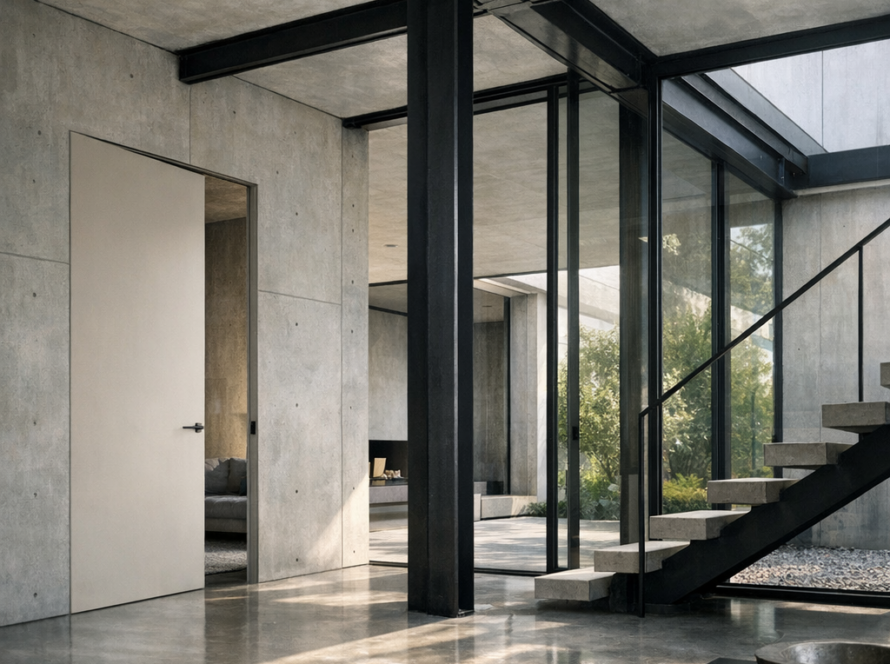
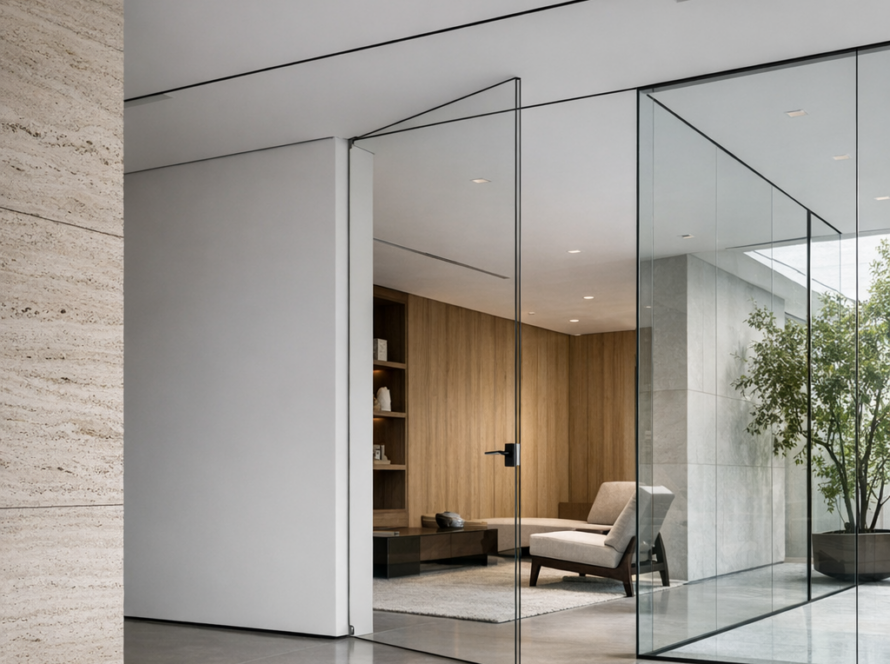
The absence of visible frames in these doors allows wall and door surfaces to visually blend, reinforcing an unbroken plane. When paired with matching textures or finishes—such as flush wood veneers, painted panels, or large-scale glass panes—the door’s presence transforms from an interruption to an extension of the wall itself.
- Match with Surrounding Surfaces: Achieving visual harmony between door and wall enhances spatial perception, making interiors appear larger and more cohesive.
- Glass Innovation: Frameless glass doors introduce transparency without framing clutter, allowing natural light to permeate rooms and blur spatial limits.
- Concealed Hardware: Specialized hinges and magnetic locks hide door mechanics, preserving the visual simplicity that supports spatial fluidity.
Manipulating Light and Shadow to Influence Space
Frameless doors are instrumental in shaping light dynamics inside a home. By eliminating framing shadows and bulky outlines, these doors permit natural and artificial lighting to flow uninterrupted, enhancing the perceived size and ambiance of spaces.
This quality is particularly compelling in interiors where natural light is a premium design element. The doors act as invisible gateways, guiding light movement and creating ephemeral effects of transparency and reflection that enrich interior atmospheres.
Spatial Flow and Movement
Architectural flow refers to how intuitively and comfortably occupants move through interconnected spaces. Frameless interior doors support this flow by visually minimizing barriers and encouraging dynamic engagement with the environment.
Particularly in open-plan homes or areas with multifunctional uses, these doors subtly shift between openness and enclosure without disrupting spatial rhythm. This has profound implications not only for daily living but also for how visitors perceive spatial hierarchy and sequence.
Interiors That Tell a Cohesive Story
Seamless transitions enabled by frameless doors contribute to interiors that narrate a continuous story. The choice to remove or conceal thresholds becomes an intentional design language, emphasizing minimalism, material honesty, and spatial generosity.
In alignment with this philosophy, architects and design practitioners increasingly consider architectural context and collaboration with manufacturers specializing in bespoke frameless systems such as Dayoris to refine the interplay of surfaces and movement.
Conclusion: Rethinking Boundaries in Interior Architecture
Frameless interior doors do more than eliminate visible frames—they challenge traditional spatial preconceptions by balancing openness and definition. By fostering continuity of materials, maximizing light transmission, and softening thresholds, these doors transform how architecture is experienced.
Embracing this subtle yet impactful approach opens new avenues for sophisticated spatial design, encouraging homeowners and professionals alike to revise interior typologies and prioritize experiential fluidity without sacrificing privacy or function.
For an extensive range of frameless door designs that heighten architectural spatiality, explore our curated catalog.