Introduction
In contemporary architecture, spatial division balances the need for openness with functional boundaries. Frameless interior doors have substantially evolved beyond their traditional roles, notably when integrated into ceiling systems. This article delves into the architectural innovation of ceiling-integrated partition systems employing frameless doors, highlighting how they redefine spatial fluidity, aesthetic harmony, and material cohesion in modern interiors.
Ceiling-Integrated Partition Systems: An Architectural Context
Ceiling-integrated partitions represent a sophisticated approach to interior spatial organization. Unlike typical wall-based divisions, these systems incorporate structural and functional elements directly within the ceiling plane, often allowing doors and partitions to retract or blend invisibly into upper architectural components.
This strategy complements the minimalist aesthetics championed in modern design, where reducing visible junctions and hardware paves the way for uninterrupted surfaces and enhanced spatial perception.
Advantages of Ceiling Integration
- Spatial Continuity: By embedding door tracks, hardware, and frames into ceilings, designers create the illusion of an unbroken volume, allowing rooms to feel more expansive and fluid.
- Enhanced Lighting and Acoustics: Concealed ceiling elements accommodate integrated lighting and acoustic treatments, fostering more controlled ambiance and soundscapes within subdivided spaces.
- Flexibility: These systems support movable partitions and sliding or pivoting frameless doors that can adapt dynamically to user needs without sacrificing the room’s visual coherence.
The Functionality of Frameless Interior Doors in These Systems
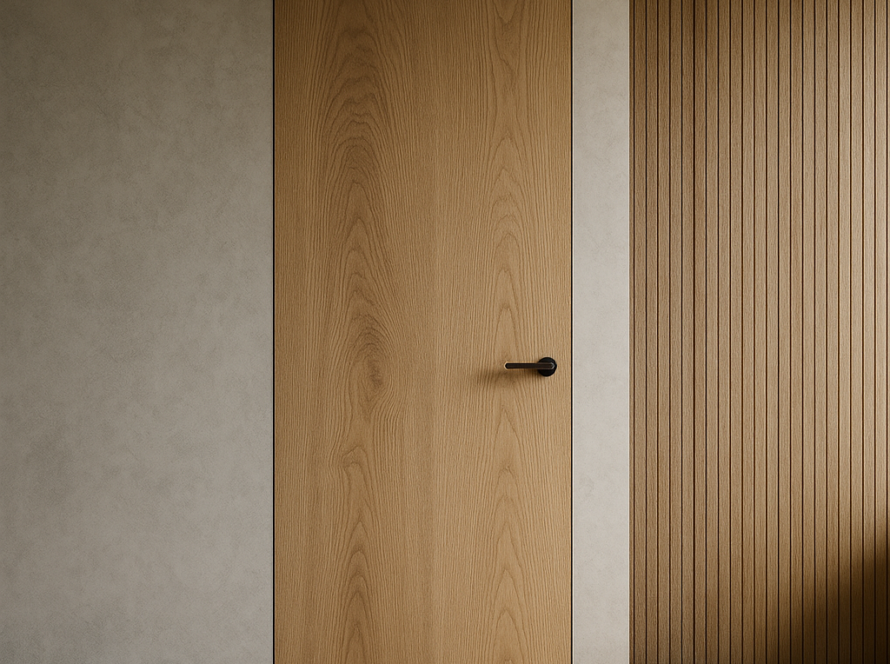
Frameless doors, typically characterized by the absence of visible frames around their panels, become ideal candidates for ceiling integration. Their minimalistic profiles facilitate smooth operation within concealed ceiling mechanisms while preserving the purity of the design.
Technical Considerations
Integrating frameless doors into ceilings involves complex coordination between door panel dimensions, ceiling depth, and structural reinforcements. The hardware must accommodate the door weight and movement type—whether sliding, pivot, or folding—while remaining invisible to occupants.
Materials and finishes are selected with attention to weight, durability, and surface treatment compatibility with ceiling-mounted tracks or supports. For example, tempered glass or lightweight composite panels are frequently preferred to ensure seamless motion and reduced strain on mechanisms.
Material and Aesthetic Harmony
One compelling reason frameless doors suit ceiling-integrated partitions is their ability to harmonize with surrounding finishes. By eliminating bulky frames, the door surfaces can reflect, complement, or contrast adjacent materials such as plaster, wood, or metal finishes embedded in the ceiling itself.
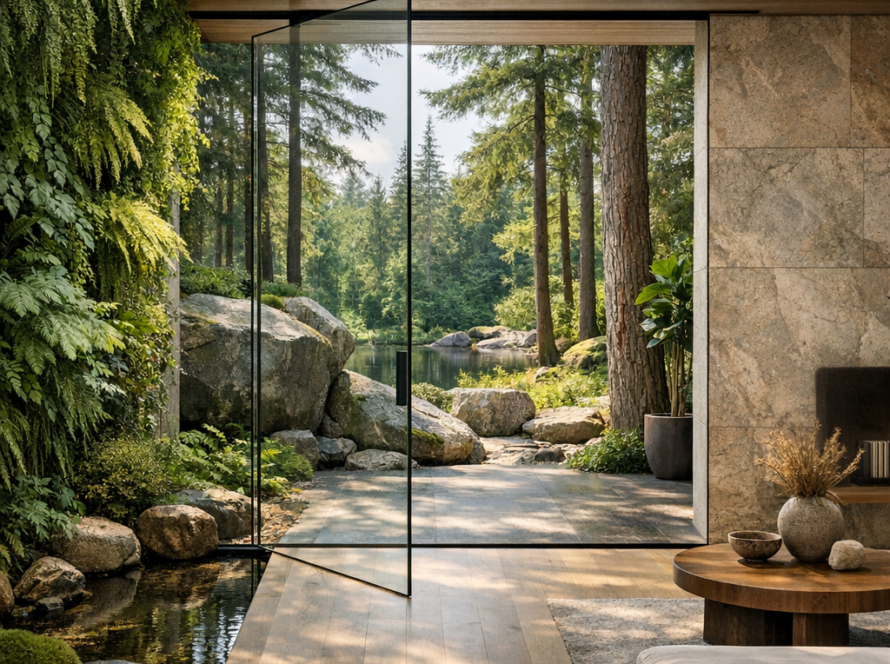
Additionally, frameless doors can incorporate fully glazed panels, translucent surfaces, or finishes matching wall cladding, strengthening the nuanced dialogue between architecture and interior design.
Case Studies and Applications
Architecturally, ceiling-integrated frameless doors excel in high-end residential and commercial projects seeking refined spatial flexibility. For example:
- Luxury Apartments: Sliding frameless doors retract flush with ceiling recesses, transforming living areas by creating open-plan spaces or intimate zones without visual clutter.
- Gallery and Exhibition Spaces: Pivoting frameless doors in ceiling tracks allow fluid circulation patterns, enabling curators to redefine visitor pathways while preserving clean sightlines.
- Corporate Interiors: Meeting rooms employ ceiling-integrated partitions with frameless doors to facilitate privacy without compromising the sleek, contemporary aesthetic characteristic of premium office design.
Challenges and Design Solutions
Despite the elegance of ceiling-integrated frameless systems, their implementation presents certain challenges:
- Structural Constraints: Ceiling depth must accommodate hardware, often demanding coordination with MEP (mechanical, electrical, plumbing) systems and building codes.
- Maintenance Access: Concealed mechanisms require thoughtful design to ensure ease of maintenance without visible disruptions.
- Acoustic Performance: Without frames, sealing and soundproofing require innovative solutions to balance permeability with acoustical separation.
Addressing these challenges demands collaboration among architects, engineers, and door system specialists to tailor solutions for each project’s unique conditions.
Integration with Contemporary Interior Trends
Ceiling-integrated frameless doors align with broader tendencies toward invisible boundaries, material continuity, and flexible living environments. Their adoption supports the architectural narrative of fluidity and purposeful minimalism, contributing to interiors that feel simultaneously open, luxurious, and functionally versatile.
For enthusiasts seeking inspiration in state-of-the-art architectural door design, platforms such as DAYORIS showcase exemplary uses of frameless doors within innovative partition systems.
Conclusion
The integration of frameless interior doors within ceiling-level partition systems exemplifies architectural innovation addressing modern demands for flexibility and seamless design. By challenging conventional boundaries between walls, ceilings, and doors, this approach redefines spatial perception and functionality.
As material technology and precision hardware continue advancing, ceiling-integrated frameless doors will likely expand their presence in sophisticated interiors across residential and commercial architecture, affirming their role as instrumental elements in the next generation of seamless spatial design.
For further exploration of frameless door options, visit the Frameless Interior Doors catalog or learn about the editorial mission on the About Us page.