Introduction
In contemporary residential architecture, the manipulation and enhancement of natural light are critical components of design that impact mood, energy efficiency, and spatial perception. Frameless interior doors, often constructed predominantly from glass and minimal hardware, have emerged as elegant architectural elements that do more than simply divide space—they shape and diffuse light, enriching the experience of interiors.
The Intersection of Transparency and Architecture
Modern architecture increasingly favors openness and fluidity between spaces while preserving function. Frameless interior doors offer a transparent or semi-transparent medium that blurs the line between defined rooms, allowing light to travel seamlessly throughout the home. This transparency contributes to an impression of expanded volume, reduces harsh shadowed zones, and invites an ever-changing play of sunlight determined by time of day and season.
Materials and Their Impact on Light
The choice of materials in frameless doors profoundly influences light behavior. Clear glass allows unfiltered daylight penetration, maximizing brightness but with potentially reduced privacy. Frosted or textured glass introduces diffusion, softly scattering light and adding nuanced shadows, enhancing depth without sacrificing discretion.
Furthermore, the thickness, coatings, and treatments applied to glass can regulate glare and solar heat gain. For highly sun-exposed facades, low-emissivity (Low-E) coatings on glass facades integrated with frameless doors help maintain comfortable thermal levels while preserving transparency.
Light Modulation Through Design
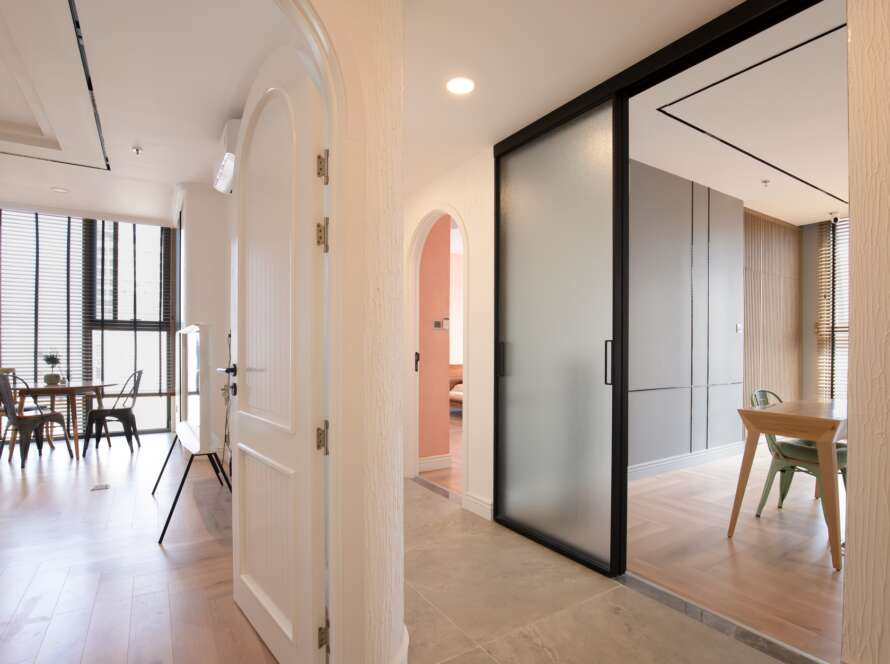
Beyond material selection, the design of frameless doors governs how light shapes interior atmospheres. Large pivoting frameless doors maximize surface area, allowing generous light throughput, effective in main living areas. Conversely, slender sliding models with strategically frosted zones can create patterns of light that animate an otherwise minimalist interior.
The positioning of doors relative to windows and sources of natural light also matter. For example, a frameless door aligned with a skylight or sun-facing window channel light into adjacent darker circulation spaces, eliminating the need for artificial lighting during daylight hours.
Architectural Harmony and Spatial Psychology
Translucent and transparent frameless doors cultivate perceptions of openness, reducing visual boundaries that often contribute to a closed or compartmentalized feel. This approach aligns with minimalist architectural philosophies that prize continuity of form and materiality.
Spatial psychology research underlines that daylight exposure enhances well-being, productivity, and ambiance in residential settings. Frameless doors that modulate light encourage these beneficial effects by striking a visual balance between openness and enclosure.
Challenges and Considerations
While aesthetically compelling, frameless interior doors tailored to optimize light demand thoughtful integration. Challenges such as controlling privacy in bedrooms or bathrooms, managing glare for comfort, and addressing energy conservation must be pragmatically considered.
Custom hardware and precise installation ensure minimal light leakage at edges while maintaining a sleek frame-free appearance. Additionally, pairing frameless doors with adaptable treatments like motorized blinds can offer balanced control over light and privacy.
Notable Architectural Applications
Leading contemporary architects employ frameless doors as sculptural transparency elements. Projects featured on design platforms such as DAYORIS showcase how these doors can act as luminous thresholds, framing views and inviting light in multifaceted ways.
In open-plan loft residences, frameless glass doors delineate private spaces without interrupting the daylight continuum. In suburban homes, these doors bridge indoor and semi-outdoor spaces, amplifying natural illumination and extending visual planes.
Conclusion
Frameless interior doors offer more than minimalist elegance—they are active architectural tools for crafting experiences through natural light. By thoughtfully considering materials, design, and placement, architects and homeowners can harness these elements to create interiors that feel luminous, expansive, and deeply connected.
Explore the expansive catalog of frameless interior doors at Frameless Interior Doors for inspirations that illuminate your home while enhancing architectural harmony.