The Invisible Threshold: Understanding Spatial Psychology and Doors
In residential architecture, doors are often seen merely as functional elements or decorative accents. However, beyond their basic utility, doors dramatically influence how space is perceived and experienced. Frameless interior doors—distinguished by their lack of visible frames and often flush alignment with walls—challenge traditional notions of spatial boundaries. They offer a unique psychological dimension that shapes the perception of openness, privacy, and continuity within the home.
Frameless Doors as Psychological Modulators of Space
Unlike conventional framed doors, frameless interior doors eliminate visual and physical interruptions, allowing for a more fluid transition between rooms. This absence of a defined frame redefines thresholds, subtly manipulating how occupants cognitively process spatial divisions. The perceived boundaries become less rigid, fostering a sense of expanded space even in compact environments.
Blurred Boundaries and Enhanced Spatial Flow
Psychologically, human perception of space relies heavily on visual cues. Frames act as distinct visual separators, signaling a transition between two distinct environments. With frameless doors, these cues diminish, creating what architects call spatial continuity. This continuity supports a seamless flow that can reduce feelings of confinement and enhance a sense of freedom within residential interiors.
Privacy Versus Connection: Negotiating Psychological Needs
This blurred threshold introduces a unique tension between privacy and openness. Frameless doors often incorporate innovative hardware that balances aesthetic minimalism with practical functionality—such as concealed hinges and flush magnetic seals—allowing effective isolation when needed without sacrificing the continuity of space. This duality addresses the psychological requirement for both private refuge and social connection, especially relevant in modern open-plan homes.
Architectural Minimalism and Cognitive Calm
Minimalism in architecture is linked with mental clarity and reduced cognitive load. Frameless doors embody this ethos by removing unnecessary visual clutter. The resulting clean lines and uninterrupted surfaces contribute to an environment that promotes calm and focus. Studies in environmental psychology suggest such spatial environments can positively affect mood and stress levels.
Materiality’s Role in Psychological Impact
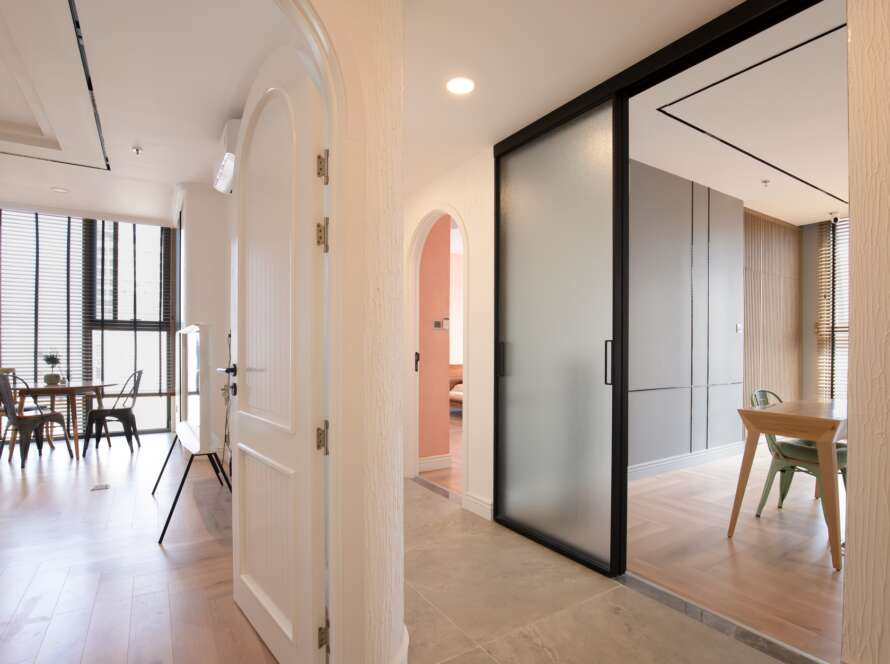
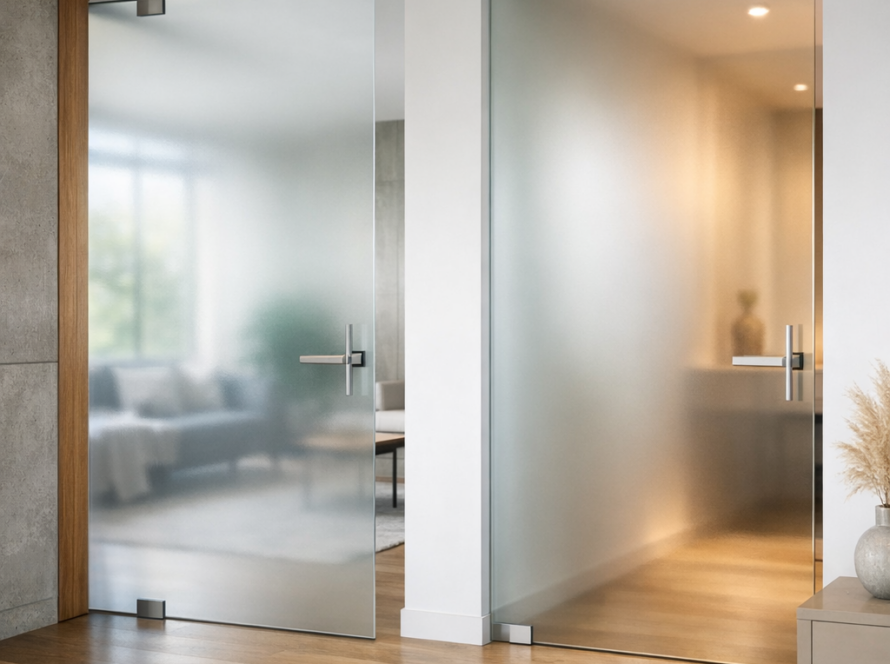
Material choices for frameless doors—ranging from glass to wood veneers and lacquered surfaces—further influence perception. For instance, translucent or frosted glass frameless doors can modulate light and privacy simultaneously, introducing a delicate balance of openness and enclosure. Wood finishes add warmth and tactile comfort, enhancing feelings of homeliness and security.
Case Studies: Frameless Doors Transforming Residential Experience
- Urban Loft with Glass Frameless Doors: In this setting, frameless glass doors dissolve barriers between living, dining, and kitchen zones, maximizing natural light flow and creating an expansive spatial experience despite limited square footage.
- Contemporary Home Using Wood Veneer Frameless Doors: The continuity of wood grain and absence of frames provide subtle cues of separation while maintaining visual unity, strengthening both functional zoning and psychological comfort.
Integrating Frameless Doors into Thoughtful Design
Incorporating frameless doors demands a holistic understanding of spatial intent and human behavior. Architects and designers must consider:
- How the blurring of spatial boundaries affects privacy expectations and circulation.
- The selection of hardware that provides silent, seamless operation supporting psychological ease.
- Complementary wall and floor finishes that enhance the illusion of continuity and spatial cohesion.
- The role of light and its interaction with door materials in shaping ambiance.
These factors nurture environments that resonate on an emotional level, transforming homes into psychologically supportive spaces.
Exploring More on Seamless Interior Architecture
For a deeper look at frameless interior doors and their design possibilities, explore our catalog of frameless doors and finishes. Additionally, DAYORIS offers inspiring examples of premium architectural interior doors that marry seamless design with functional elegance.
Conclusion: Beyond Function—Doors as Experiential Elements
Frameless interior doors transcend traditional boundaries of door design by intertwining spatial perception with psychological experience. Their seamless profiles and refined materials contribute to homes that feel more open, calming, and cognitively harmonious. This intersection of architectural minimalism and human psychology represents a compelling frontier in modern interior design, inviting architects, designers, and homeowners to reconceive how transitions between spaces enrich daily life.