Exploring the Relationship Between Frameless Interior Doors and Minimalist Steel Architecture
In contemporary architecture, the marriage of materials often defines the character and rhythm of interior spaces. Frameless interior doors, recognized for their clean lines and absence of bulky casings, find an ideal partner in minimalist steel architecture. This convergence transforms transition elements from mere functional components into deliberate design gestures that enhance spatial perception and material interplay.
Material Dialogue: Steel and Frameless Doors
Steel architecture embodies strength, precision, and industrial clarity. When paired with frameless interior doors — commonly constructed from glass, wood, or composite materials without a visible frame — the contrast and complementarity create intriguing design dynamics.
- Visual Contrast and Texture: The cold, often matte or brushed finish of exposed steel elements contrasts elegantly with the smooth, uninterrupted surfaces of frameless glass or high-quality wood doors. This interplay emphasizes the tactile qualities of both materials.
- Structural Honesty: Minimalist steel architecture celebrates structural forms without disguise. Frameless doors contribute to this honesty by minimizing visual interruptions and emphasizing the purity of planes and edges.
- Light Transmission: Frameless glass doors allow natural or artificial light to permeate deeper into interiors, an effect enhanced by steel’s sleek lines that often frame large openings or windows.
Design Principles Underpinning the Integration
The integration of frameless interior doors into steel-driven minimalist environments adheres to several architectural principles:
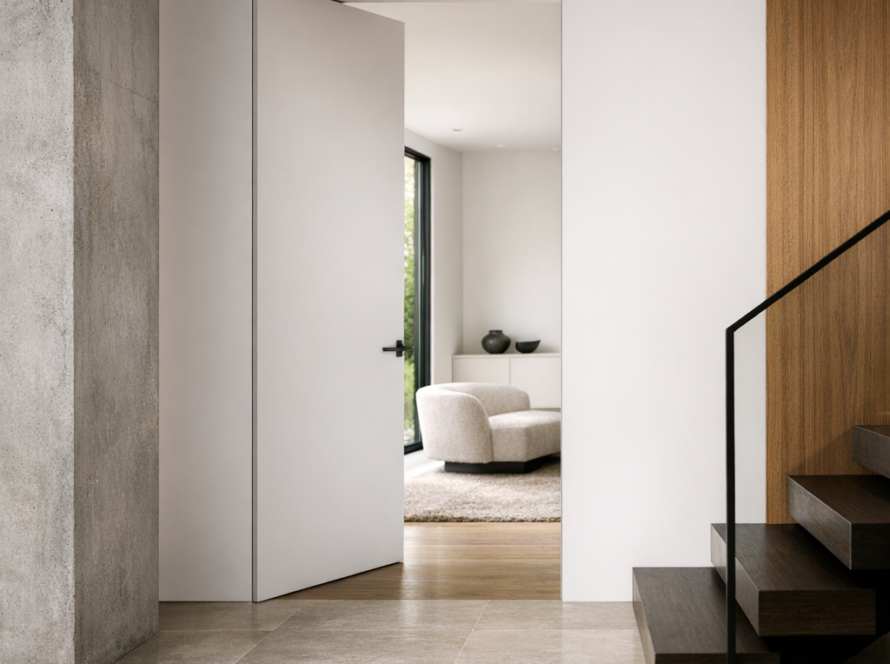
- Continuity: Seamless visual flow is paramount. Frameless doors installed flush with steel frames or wall planes avoid shadow lines or raised moldings, creating uninterrupted sightlines.
- Precision Fabrication: Both steel frameworks and frameless doors demand meticulous workmanship. Tolerances must be tight to ensure alignment, smooth operation, and aesthetic perfection.
- Minimal Hardware: Concealed hinges, flush handles, or touch-latch mechanisms maintain the minimalist ethos and prevent disrupting the sleek facades common in steel interiors.
Applications and Spatial Impact
The union of frameless doors and steel architecture manifests in various residential and commercial contexts with distinctive spatial outcomes:
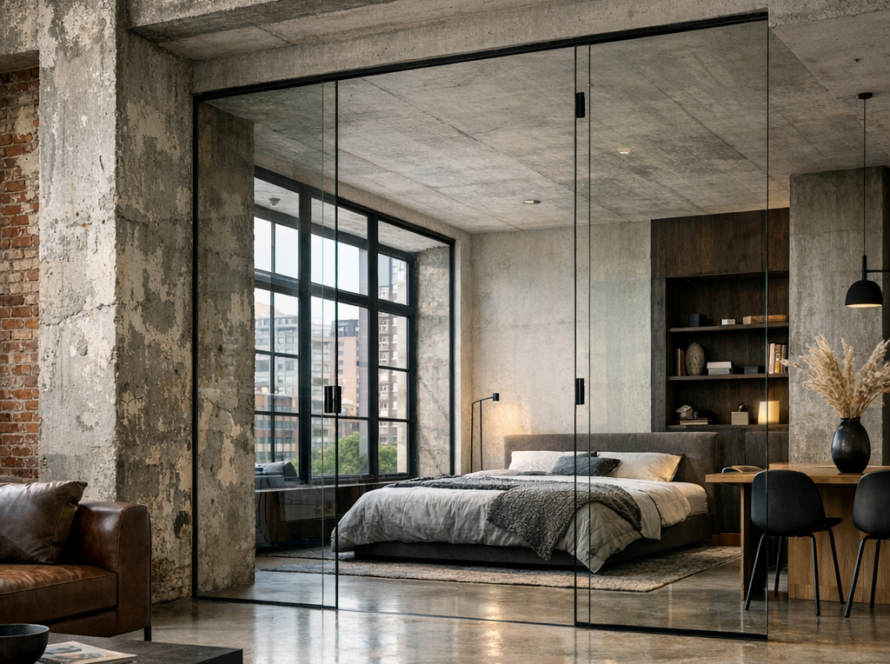
- Open-Plan Lofts: Frameless glass doors within steel frames maintain open sightlines while providing spatial separation when needed — ideal for loft conversions embracing industrial heritage.
- Luxury Residences: In luxury homes employing exposed steel beams, frameless solid wood doors with minimal surface treatment add warmth without detracting from the structural framework.
- Corporate Offices: Frameless acoustic glass doors with steel detailing preserve privacy yet retain transparency, promoting a balanced dialogue between openness and seclusion.
Technical Considerations for Seamless Integration
The collaboration between frameless interior doors and steel architecture requires careful technical planning:
- Wall and Frame Depth Compatibility: To maintain flush installation, door thickness and steel frame profiles must be precisely coordinated. Custom steel frame fabrication often accommodates these needs.
- Thermal Expansion: Steel and glass or wood expand at different rates. Factoring this into tolerance and hardware choice prevents misalignment or stress over time.
- Hardware Selection: High-quality concealed pivot or continuous hinges designed for heavy steel doors and frameless panels ensure smooth movement and durability.
Complementary Architectural Elements
The minimalist steel aesthetic paired with frameless doors impacts lighting, flooring, and furnishing choices:
- Lighting: Natural light is maximized by frameless doors, which is often enhanced by linear LED fixtures integrated into steel ceiling or wall elements.
- Flooring: Polished concrete, natural wood, or large-format stone tile floors harmonize with metal and glass, grounding the industrial-chic vibe.
- Furnishings: Minimalist furniture with steel accents complements door and architectural frameworks, generating cohesive interiors without visual clutter.
Architectural Inspiration and Resources
For design professionals and homeowners wanting to explore frameless doors in steel architecture, it’s useful to view curated, premium collections showcasing this synergy. Platforms like DAYORIS offer inspirational models of frameless interior doors carefully integrated within minimalist, steel-focused interiors, providing valuable insights into material combinations and finishing options.
Conclusion: A Synthesis of Material Elegance and Spatial Purity
Frameless interior doors and minimalist steel architecture represent a compelling dialogue between materials that encapsulates modern design’s aspirations: simplicity, transparency, and structural clarity. This partnership elevates doors from functional thresholds to integral compositional elements, transforming interiors into cohesive statements of refined architectural expression.
For a detailed exploration of frameless door possibilities and architectural solutions, visit Frameless Interior Doors’ catalog and discover options that transcend conventional door design.