Architectural Minimalism and the Quest for Seamlessness
Architectural minimalism, a movement emphasizing simplicity, clarity, and reduction of form, seeks harmony between space, material, and light. In this context, every element becomes essential, shedding all superfluous detail to achieve purity. Frameless interior doors have emerged as silent contributors to this aesthetic ambition, serving not merely as functional barriers but as invisible gateways that uphold minimalism’s fundamental principles.
Frameless Doors as Extensions of the Wall
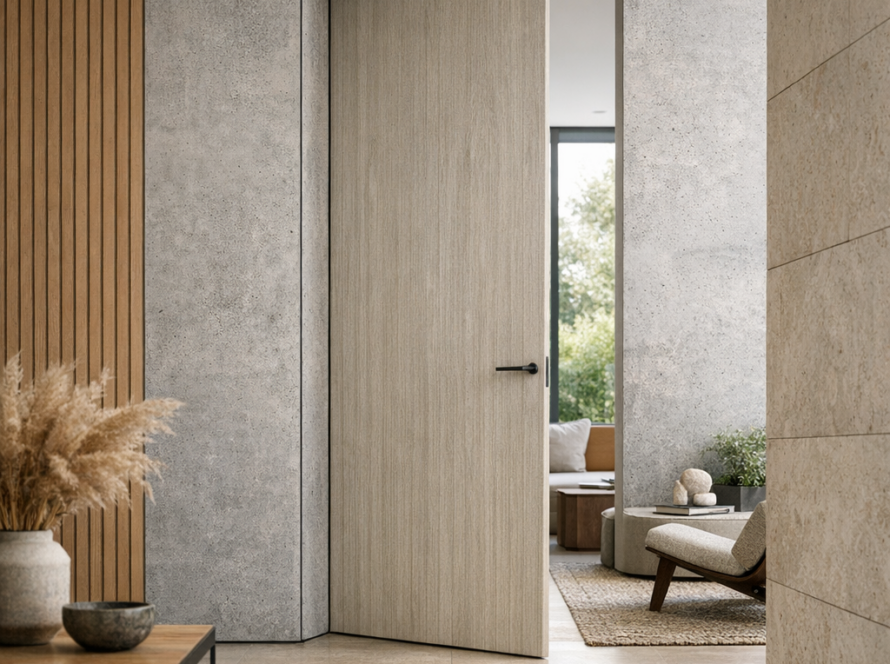
One of the defining characteristics of architectural minimalism is the dissolution of traditional boundaries through continuity in surfaces and materials. Frameless interior doors, by design, lack the conventional bulky door frames or casings, resulting in flush, unbroken wall planes.
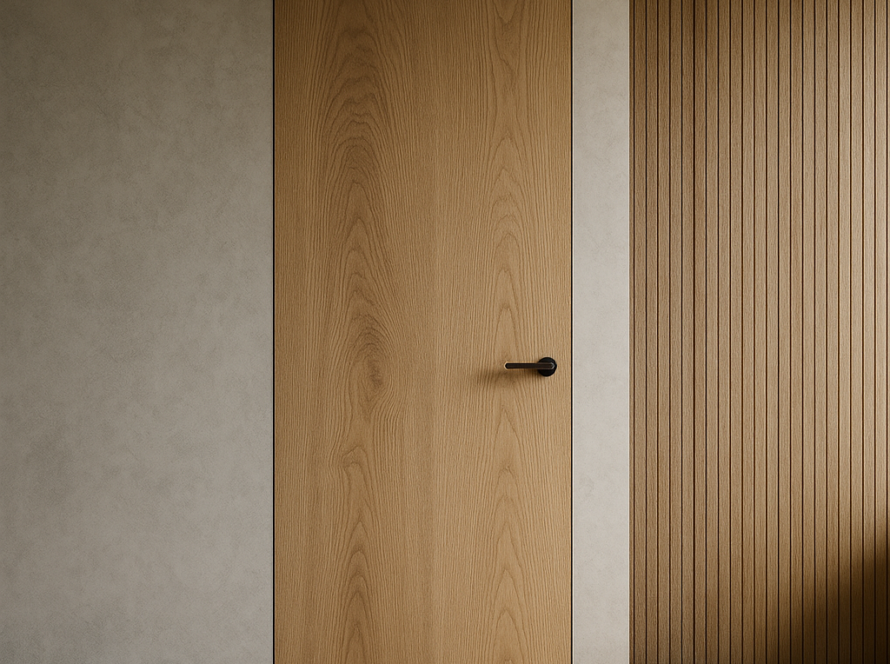
This absence of a frame or visible trim allows the door leaf to blend with the adjacent wall finish, often in identical materials such as paint, wood veneer, or plaster. The visual effect is subtle yet profound: a door that virtually disappears, inviting occupants to experience the flow of space uninterrupted.
Material Considerations and Finish Integration
The success of frameless interior doors in minimalistic contexts hinges on meticulous material choice and finishing techniques. Common strategies include:
- Wood Veneer Continuity: Using continuous wood grain patterns across the door and wall paneling enhances seamlessness.
- Monochromatic Paint Application: Matching paint colors and finishes precisely between door and wall eliminates perceptual boundaries.
- Textural Harmony: Coordinating surface textures, such as smooth plaster or matte lacquer, ensures a tactile uniformity that complements visual integration.
Architectural Implications of Concealed Frames and Hardware
Invisible hardware and concealed frame systems are critical enablers for frameless doors in minimalist interiors. Innovations in hinge technology and magnetic or flush handles allow doors to operate almost imperceptibly.
Concealed hinges, often installed within the door rabbet or jamb in hidden cavities, ensure no hardware protrudes to disrupt the minimalist plane. Flush magnetic catches replace traditional knobs, maintaining the door’s smooth surface and reinforcing its camouflaged character.
Concealed Frame Systems
Unlike conventional doors requiring visible frames, frameless doors utilize hidden structural supports embedded within wall cavities. These concealed frames accommodate load-bearing functions and tolerance adjustments, ensuring proper door operation without visual compromise.
Spatial Perception and the Psychological Effect
Removing visible frames and hardware from interior doors influences spatial perception profoundly. Frameless doors eliminate psychological barriers and enhance openness in interiors, making rooms appear larger and more interconnected.
By softening transitions between spaces, frameless doors support environments where flow and continuity take precedence over compartmentalization. This approach is particularly impactful in homes or offices designed to maximize natural light and promote fluid circulation.
Applications in Modern Residential Architecture
Modern residences often incorporate minimalist design languages that emphasize open plans and understated elegance. Frameless interior doors complement this by:
- Maintaining Clean Wall Planes: Perfect for galleries, corridors, or living spaces where uninterrupted surfaces heighten the aesthetic atmosphere.
- Subtle Room Delineation: Offering optional privacy without visual intrusion.
- Integrating with Custom Millwork: Allowing doors to become part of bespoke cabinetry or wall paneling with continuous surfaces.
For inspiration on premium architectural interior doors that align with minimalist principles, platforms like DAYORIS provide curated collections exhibiting cutting-edge designs and refined craftsmanship.
Challenges and Considerations
While frameless interior doors offer aesthetic superiority in minimalist architecture, they also present specific challenges:
- Precision Installation: Alignment tolerances are narrow; any misalignment is more noticeable without frames to mask imperfections.
- Material Durability: Frequent handling on flush surfaces requires durable finishes to prevent wear.
- Acoustic and Thermal Performance: Frameless doors often require careful sealing solutions to balance minimalism with functional needs.
These aspects often require collaboration with skilled contractors and architects to achieve flawless integration.
Conclusion
Frameless interior doors epitomize the minimalist pursuit of invisibility and purity in architectural interiors. By erasing conventional boundaries through concealed frames, flush surfaces, and subtle hardware, they transform everyday functional elements into integral components of seamless spatial narratives.
As minimalist architecture continues to shape modern residential design, frameless doors stand as invisible gateways — not only connecting spaces but also elevating the sensory experience of refined simplicity.
Discover more about sophisticated door systems and architectural innovations on Frameless Interior Doors to explore how these elements can transform your next project.