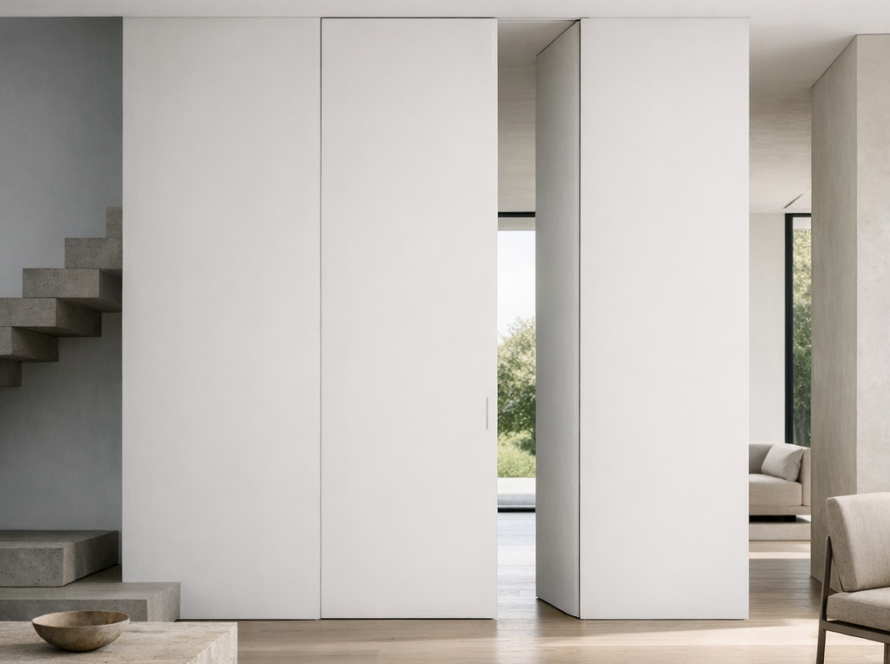
Acoustics Beyond Sight: Introducing Frameless Interior Doors
In the realm of contemporary interior architecture, the confluence of aesthetic minimalism and functional sophistication is paramount. Frameless interior doors, long celebrated for their sleek, unembellished design and seamless integration with surrounding walls, have a subtler, often overlooked impact: their influence on acoustic atmospheres within a space.
While their visual contribution to modern interiors is undeniable, frameless doors hold nuanced acoustic potentials that reshape how sound diffuses, reflects, or is contained. This article delves into the complex interaction between frameless door design and architectural acoustics, revealing how these refined portals become silent guardians of auditory comfort.
The Acoustic Challenge in Modern Minimalism
Modern residential and commercial interiors frequently embrace open plans and hard, reflective surfaces—glass, polished stone, and metal—that naturally intensify reverberation and sound transmission. The contemporary aesthetic of frameless doors, characterized by flush surfaces and minimal profiles, seems at odds with conventional sound management principles, which traditionally rely on bulky or layered constructions.
So how do frameless interior doors respond to this acoustic challenge? The answer lies in both material selection and precision engineering rather than mere mass or volume.
Material Choices: Thin Yet Sound-Sensitive
The core materials used in frameless doors vary significantly—from rich hardwood veneers to composites layered with acoustic damping cores. These cores may incorporate mineral wool, recycled fibers, or viscoelastic layers designed to reduce sound transmission without compromising door thinness.
Moreover, surface finishes play a role. Wood veneers, for instance, can slightly absorb mid to high frequencies, while glass panels integrated into frameless designs, especially when textured or laminated, modulate reflections to create textured soundscapes rather than sterile echoes.
Precision Engineering and Seal Integrity
Unlike traditional doors with bulky frames, frameless designs rely on concealed hinges, precise edge alignments, and tailored seals to form tight acoustic barriers. The integration of high-performance gaskets and magnetic seals helps to minimize gaps, a key factor in preventing unwanted sound leakage.
These seals must be carefully engineered for durability and consistent compression to maintain acoustic effectiveness over time, a critical consideration in residential homes prioritizing quiet zones or in offices requiring privacy without bulky sectional walls.
Acoustic Atmospheres: Beyond Noise Control
Frameless doors contribute to acoustic atmospheres not only by reducing noise transmission but also by shaping the experience of sound within a room. Their flush surfaces and minimalist hardware reduce diffraction shadows—zones where sound waves might scatter unpredictably—thereby maintaining a cleaner, more controlled reverberation field.
Architects and designers can leverage this quality when creating serene environments, such as private reading nooks or meditation spaces, within acoustically sensitive open-plan residences. By selectively incorporating frameless doors with acoustically enhanced materials, they sculpt spatial soundscapes that feel expansive yet intimate.
Invisible Acoustic Boundaries
One of the most compelling architectural advantages of frameless doors is their ability to define or dissolve boundaries without overt visual interruption. This subtle delineation extends to sound flow, where a frameless door can become an almost imperceptible acoustic boundary, balancing openness with sufficient auditory separation.
For example, in loft-style apartments or galleries, a frameless door can discreetly seclude a workspace or selective exhibit while preserving an overarching sense of continuity. This nuanced approach responds to the dual desires for connectivity and quiet—both vital in modern lifestyles and work environments.
Contextualizing Frameless Doors Within Acoustic Strategies
Although frameless doors offer inherent acoustic advantages, they function best as part of a holistic sound design strategy. Complementary acoustic treatments on walls, ceilings, and floors, along with spatial planning that considers sound transmission paths, enhance their impact.
Innovative manufacturers and designers have begun integrating frameless door systems with advanced acoustic panels or hidden damping mechanisms inside wall cavities, creating composite solutions that marry the invisible aesthetic with measurable noise reduction.
For inspiration on premium architectural doors that embody this quiet balance, DAYORIS exemplifies the integration of refined aesthetics and acoustic performance in high-end residential and commercial designs.
Conclusion: When Silence Becomes Architecture
In the pursuit of architectural elegance, frameless interior doors transcend their role as mere portals. They act as silent shields, carefully sculpting acoustic atmospheres that support comfort, privacy, and spatial harmony.
This delicate interplay of materials, engineering, and spatial integration ensures they remain not only visually minimal but sonically significant elements within contemporary architecture.
As acoustic awareness deepens in design discourse, recognizing the unseen acoustic roles of frameless interior doors enriches our appreciation of their place in shaping modern interiors that resonate in more than just appearance.
For further exploration of frameless door aesthetics and options, visit the catalog and learn about their invisible boundary magic.